
Record what happens when you come home
Opening the door, putting down bags, changing shoes and setting down keys determine whether the entrance stays cluttered. Observe family habits and decide what belongs there. Schoolbags, work papers and sports equipment need more than a single shoe cupboard.
Organise shoes by their actual types
Boots, trainers and slippers need different heights and depths. Count regularly worn pairs and store seasonal shoes separately. Discuss cleaning, ventilation and door operation so extra capacity does not make changing shoes awkward.
Provide a useful temporary landing place
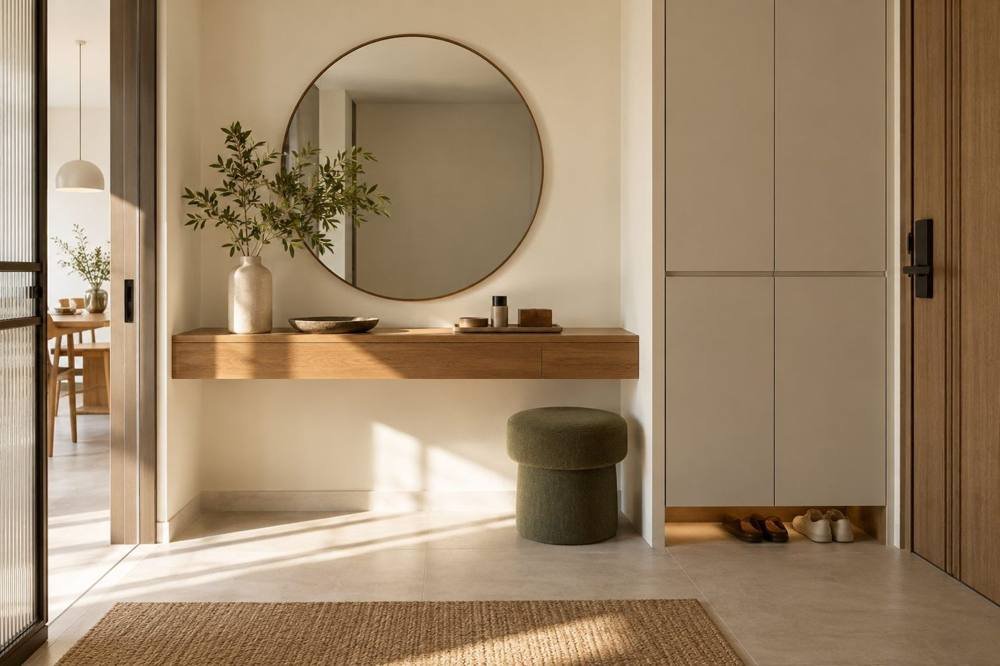
A small ledge, hooks or drawer can collect keys, masks and small items, but each place needs a purpose. An oversized surface invites clutter; no surface carries it into the living room. If space allows, a seat can help with shoes while access and door operation remain clear.
Use simple materials for the first impression
Continue the home's timber and wall palette, with soft lighting and a little display. Position mirrors for the sightlines and entrance conditions rather than adding them for decoration alone. A useful entrance makes coming and going less rushed instead of becoming a display window.