
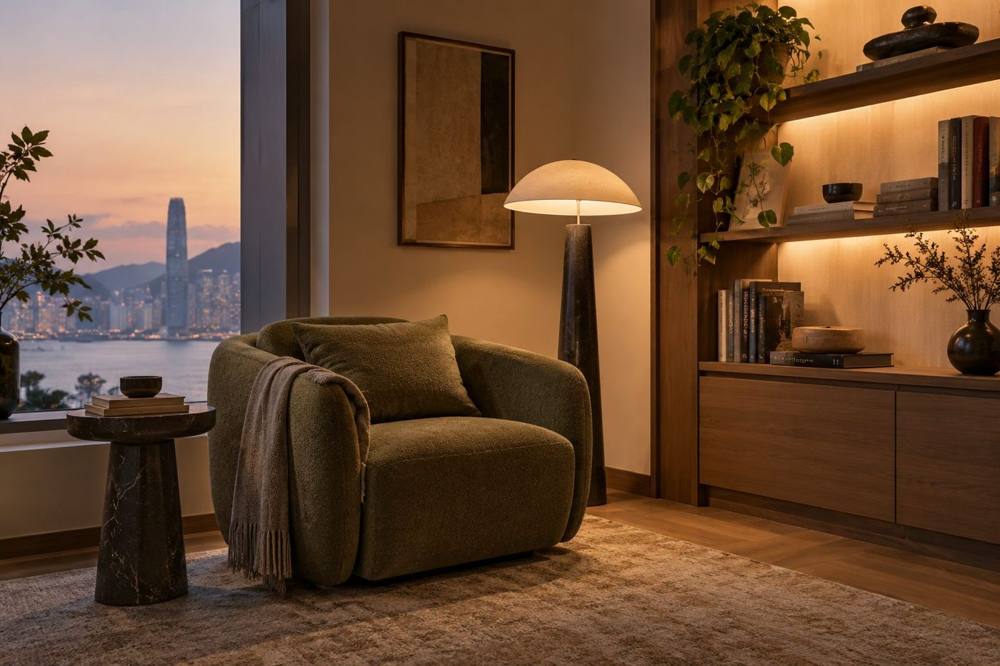
Start lighting with activities
One living-room switch may leave reading too dim and television viewing too bright. List activities such as cooking, reading, cleaning, talking and resting; their lighting needs differ. Explain everyday situations so the team can consider positions and controls.
Give light sources separate roles
General lighting provides base brightness, task lighting supports reading or worktops, and accent lighting can highlight walls, artwork and depth. Complex coves are not essential: ceiling, table and pendant lights can have clear roles. Avoid excessive brightness in one position beside pronounced dark corners.
Review lighting beside the actual materials
The same fitting looks different against white walls, timber or stone. Bring key samples when choosing lights and consider colour appearance, glare and reflections. Pendant positions should suit the table and sightlines. If the table may move, consider whether lighting will still work.
Plan controls and maintenance early
Place switches along arrival, bedtime and night-time routes, and make fittings accessible for cleaning and replacement. Fixed electrical work should be arranged by a registered electrical contractor using qualified personnel. Lighting should offer appropriate brightness for different moments, as well as looking attractive.
Further Reference | Official Guidance
Electrical and Mechanical Services Department | Registered Electrical Contractors ↗