
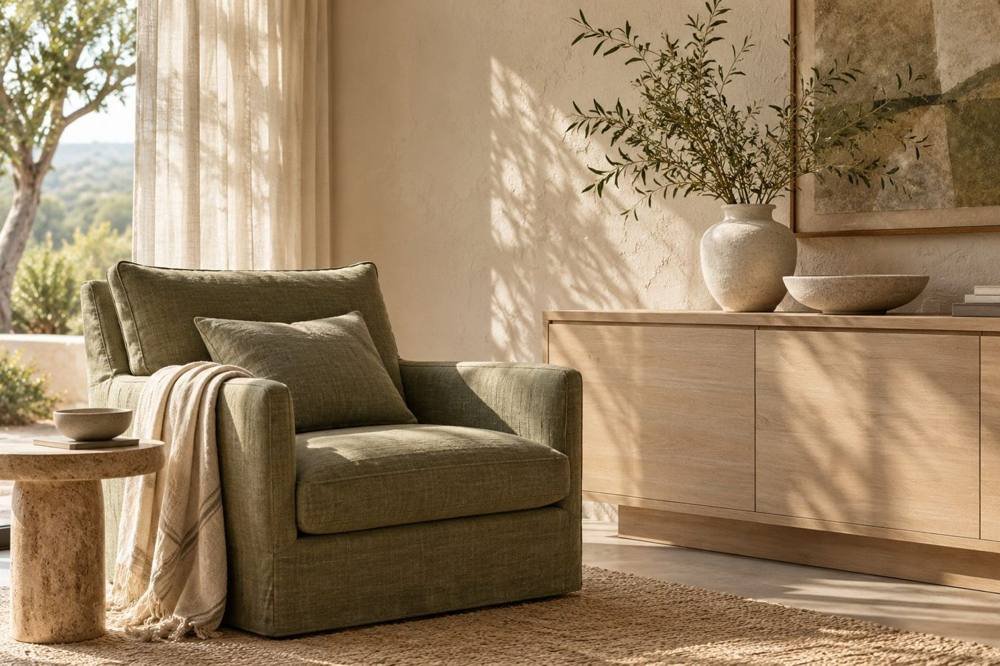
Choose an atmosphere before a colour code
Warm whites may lean yellow or grey and change with daylight and artificial light. Describe the desired feeling first: bright, calm, fresh or lively. Organise reference images around these words before choosing materials, rather than chasing one colour code immediately.
Let large surfaces settle the palette
Walls, floors and large cupboards dominate the view. Coordinate them before adding variation through sofas, curtains and smaller furniture. Timber need not match exactly, but tones and depths should relate. Combining every favourite grain does not necessarily create a richer result.
Try accent colours in replaceable elements first
If green, blue or terracotta appeals but feels uncertain long term, try cushions, artwork or movable furniture first. Large fixed cabinets are harder to alter, so review samples carefully. Colour need not appear everywhere; empty space helps selected accents stand out.
Confirm choices in your own light
Review paint, floor, fabric and cupboard samples together by day and at night. Photographs communicate direction but cannot guarantee an identical physical result. A lasting palette has no single formula: materials should work together and create somewhere you want to spend time.