
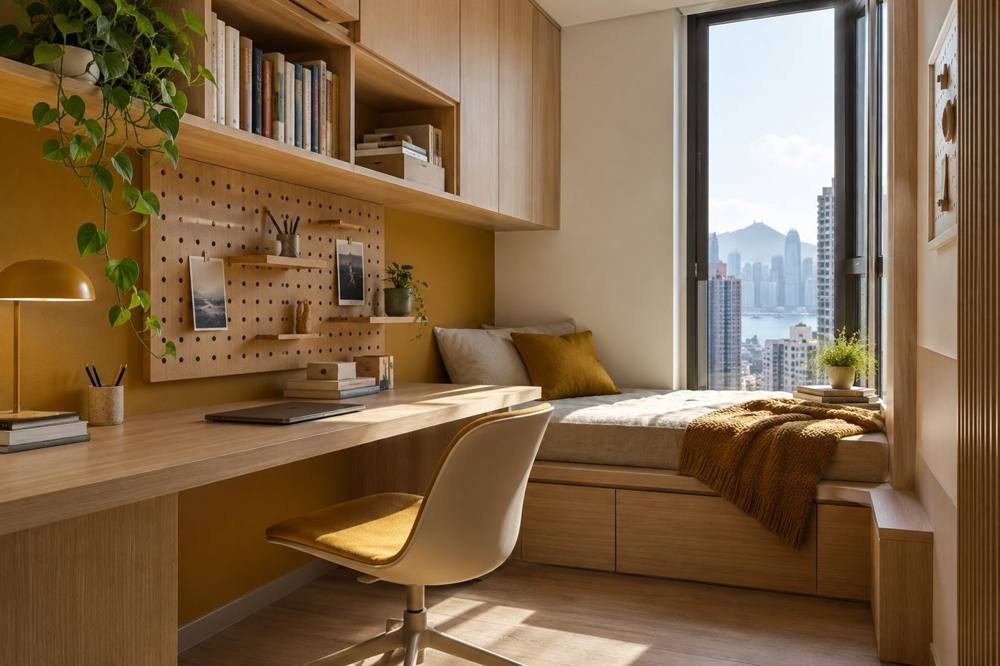
Involve the person using the room
A young person's room may hold textbooks, sports equipment, instruments and collections as well as a bed and desk. Ask them to explain daily use and inconveniences. Discussing activities is more helpful than imposing storage that adults consider tidy.
A desk is not an isolated dimension
Allow for laptops, screens, books and writing, as well as chair movement and reaching. Consider daylight, curtains, task lights and screen reflections together. Try arranging frequently used items before deciding the relationship between desk and shelves.
Leave growth to adjustable elements
Interests and school materials change, so fixed forms are not ideal everywhere. Movable furniture, adjustable shelves and adaptable drawers allow the room to evolve. A small display area can express personality without making organisation difficult.
Rest needs space too
Where possible, distinguish work and rest visually by putting supplies away or changing lighting. This does not guarantee academic performance; it reduces obstacles in daily use. A good room gives belongings clear places and allows the user to make changes as they grow.