
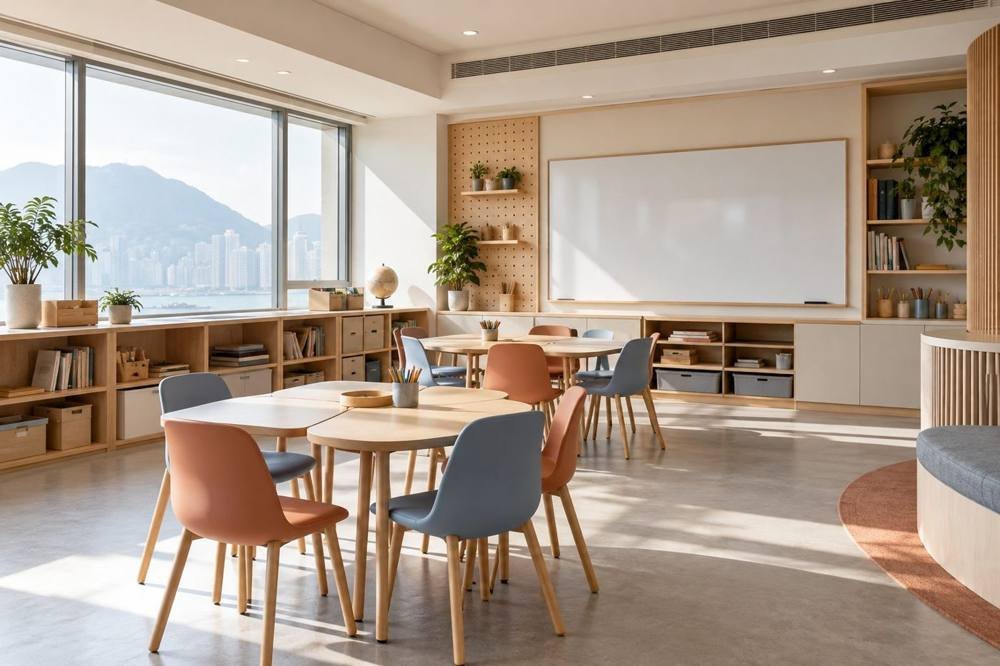
List activities before arranging furniture
Learning settings may support presentations, discussion, demonstrations and making. Understand group sizes, supplies and movement first. Where one activity dominates daily use, avoid unnecessary changes simply to claim flexibility; frequent scenarios deserve straightforward provision.
Make space for seeing and doing
Discuss boards, displays and demonstration positions with sightlines and lighting. Check worktop capacity, movement behind chairs and teacher access to each group against actual dimensions. A perspective image communicates atmosphere but cannot replace a full layout review.
Storage is part of the programme
Group learning materials, finished work and cleaning supplies by user and activity. Make frequent items accessible with clear return places after use. Keep display areas adaptable rather than filling everything permanently and making updates difficult.
Let the environment support activities
Observe daylight, glare, sound and ventilation on site. Educational and activity premises may have specific requirements; relevant professionals should confirm use, fire, accessibility and facility alterations. Space cannot replace teaching, but it can reduce practical obstacles to activities.